Jepson Pottery Blog
Embracing the Beginner's Mind
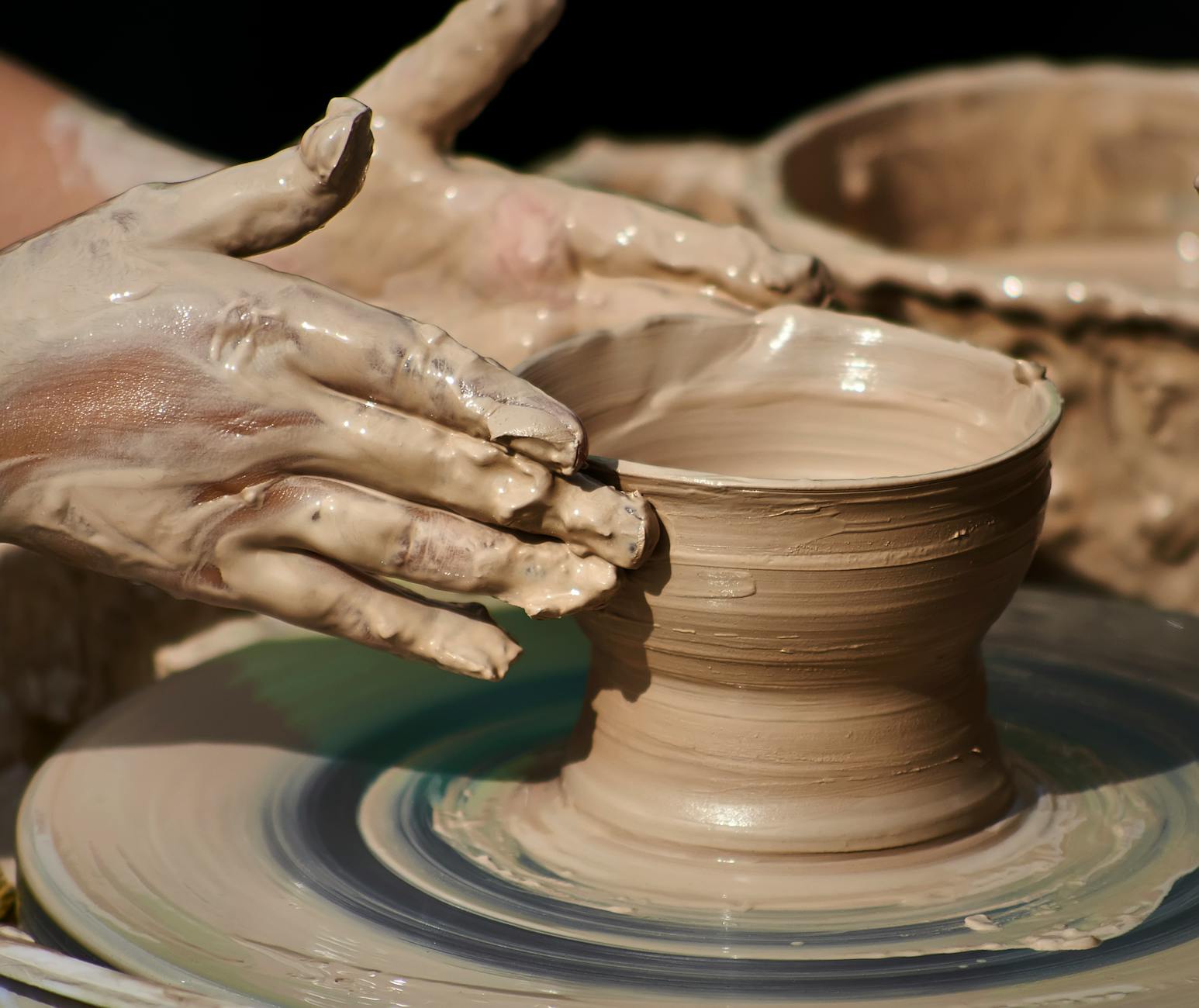
In all my years at the wheel, watching hundreds of pairs of hands meet spinning clay in my Geneva studio and across university classrooms, I have noticed a peculiar thing. The students who struggle the most are rarely the ones lacking manual dexterity. They are the ones carrying an invisible suitcase full of perfectionism. They want their first cylinder to look like a Greek amphora, their first bowl to emerge from the bat ready for a high-end gallery.
Clay has a way of teaching you humility long before it teaches you artistry. When you are learning pottery at home, that relentless pressure for perfection is the very first thing you need to wedge up and throw away. The wheel doesn't care about your age or your experience — it only responds to the honest, unhurried conversation between your fingers and the earth. If you approach your workbench with a beginner's mind, welcoming the wobble and celebrating the collapse, you unlock a profound kind of freedom. You stop fighting the material and start listening to it.
Learn with Stephen — the full course, $49.99 lifetime
8 full-length video lessons, one-time price, 30-day money-back guarantee.
Get the Video Course →Getting Started with the Right Tools
Students ask me all the time what kind of elaborate gear they need to purchase before they can even touch a lump of mud. They browse catalogs looking at industrial pugmills and kilns that cost as much as a used sedan, convincing themselves that craft is something you buy rather than something you build.
I learned this the hard way, decades ago, when I realized that some of the most soulful pots in history were born from very little equipment indeed. When you are figuring out how to learn pottery in your own home, keep the gear list remarkably simple. You do not need an expensive pottery wheel on day one, and you certainly don't need a kiln in your garage to begin your journey. A sturdy table, a smooth wooden rib, a cutting wire, a sponge, and a few pounds of forgiving, beginner-friendly stoneware are more than enough to start understanding the plasticity of clay.
When you do decide to explore advanced pottery techniques or invest in your setup, let your curiosity guide your purchases, not your anxieties. There is a wonderful world of pottery for beginners out there, and diving into structured, high-quality pottery video lessons can bridge the gap between fumbling in the dark and feeling a genuine rhythm in your hands.
Creating a Home Studio
You do not need a sprawling barn or a dedicated architectural wing to make pots at home. A corner of a porch, a sturdy kitchen table covered in canvas, or a sheltered spot in the garage will do nicely. What matters far more than square footage is intention.
When you set up your workspace, think about sensory sanctuary. You want a space where you don't have to panic about a stray splash of slip or a bit of dried crumbly clay on the floor. Keep your tools within arm's reach so you aren't breaking your concentration to hunt for a wooden modeling tool. Working with clay is tactile and grounding; the cool, damp weight of the earth against your skin should feel like an invitation to slow down. If your environment is too sterile or too precious, your hands will tighten up, and tight hands make stiff pots. Give yourself room to breathe, room to make a mess, and room to walk away when the clay gets stubborn.
Overcoming Frustration and Finding Joy
Every potter knows the sound of a piece flying off center, the sudden centrifugal tragedy of a wall twisting into a wet ribbon of despair. It happens to me, and it has happened to every master whose work sits in the Smithsonian American Art Museum. Frustration is not a sign that you are failing; it is simply proof that you are participating.
When a form collapses, take a deep breath, close your eyes, and feel the damp coolness of the clay on your palms. Remember that nothing in this craft is truly wasted. That slumped bowl can be wedged right back down into responsive, workable pug clay, ready for a second chance.
If you find yourself hitting a wall while trying to learn pottery online, don't isolate yourself in the struggle. Step back, watch how others shape their forms, and observe the patient pressure of an experienced thumb. Whether you are mastering the delicate geometry of a thrown vessel or following a thoughtful coil pottery guide, remember to enjoy the tactile rhythm of the making. The true magic of pottery isn't sitting on a shelf when the firing is done — it is the quiet, meditative peace you find while your hands are deep in the mud, right there in the center of the spin. Visit us at jepsonpotteryvideos.com to explore our full library of pottery video lessons and let's keep making together.
Watch Stephen Demonstrate This Technique
Get lifetime access to 8 detailed pottery video lessons — wheel throwing, hand-building, glazing, and more.
Get the Video Course — $49.99 with code I4N4LHE7OL →Learn Pottery from a Master
60+ years of wheel-throwing, hand-building, glazing, and kiln work — now in detailed video lessons you can follow at your own pace.
8 full-length videos · Lifetime access · $149 $49.99 with code I4N4LHE7OL
Photo by igovar igovar • Published September 11, 2026