Okay, here’s a blog post draft, aiming for that warm, experienced, and slightly contemplative Stephen Jepson voice, incorporating the requested elements and research.
The Weight of Clay – A Slow Dance with Time
Let’s be honest. Sometimes, I think about the clay itself. Not in a sentimental way, not yet. More like… a quiet acknowledgement of its presence. It’s a constant companion, a grounding force, a silent witness to a lifetime spent coaxing form from earth. I’ve spent sixty-plus years at the wheel, and honestly, it’s become almost a part of me. It’s a stubborn, beautiful thing, this clay. It doesn't care about your age, your experience, your carefully constructed narrative of success. It simply *is*. And that’s why I’ve always found myself drawn to it, to the slow, deliberate dance of shaping it.
My name is Stephen Jepson. I’m a potter from Geneva, Florida, and my studio is nestled in the heart of the Keys. I’ve been working with clay for over 60 years, and the most rewarding part isn’t the technical mastery – though that’s certainly a thrill – it’s the feeling of connection, of being *in* the clay. It’s a conversation, really, a conversation I’ve had with myself, with the earth, and, perhaps, with the past.
The First Moments – A Lesson in Patience
My journey began, as most do, with a simple, almost childlike fascination. I remember, vividly, the first time I touched clay. It was a lump of reddish-brown earth, cool and yielding under my fingers. I was about ten years old, and my grandfather, a seasoned farmer, had gifted me a small, unassuming pot. It wasn’t perfect, of course. It was lopsided, slightly uneven. But it felt…right. It was a tangible connection to something ancient and powerful. That initial feeling – that slight sense of responsibility, of needing to *correct* something – that’s a foundational lesson, I think. It’s about understanding that things rarely come perfectly formed. You have to be willing to accept imperfection, to embrace the wobble and the slight asymmetry. It's a constant, gentle reminder that striving for perfection is often a chase, not a destination.
The Art of Stoneware – A Slow, Steady Build
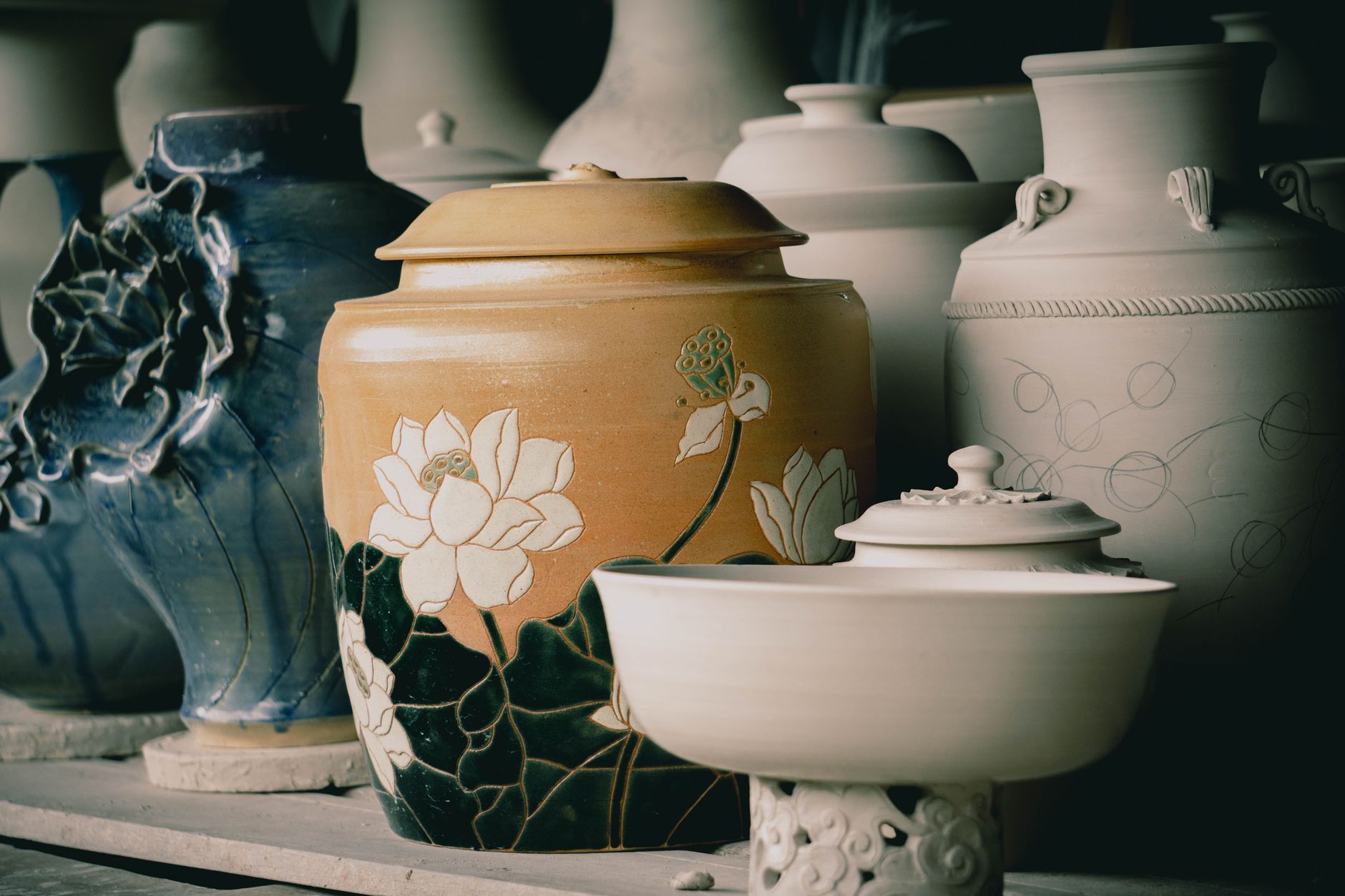
I started with stoneware, initially. It felt a bit more… stable, a little less prone to accidental disintegration. I focused on simple forms – bowls, cups, jugs. The process was incredibly slow. I’d spend hours, sometimes days, meticulously layering the clay, building up the walls with a slow, deliberate pressure. I used a simple, slightly weathered wheel technique – a gentle, constant rotation – and I really, *really* paid attention to the feel of the clay in my hands. I learned the hard way, decades ago, that too much pressure would lead to warping and cracking. It’s a humbling realization, really. The clay doesn’t care about your age or your experience – it cares about the intention behind your work. It’s a collaborator, a silent partner in the creation.
The Difference Between Earthenware and Stoneware – A Subtle Shift
Now, let’s talk about the difference. Earthenware clay is essentially a raw, unglazed form of stoneware. It’s porous, more absorbent, and it tends to absorb moisture more readily. It’s fantastic for creating rustic, earthy pieces – little mugs, rustic bowls, anything that feels connected to the earth. Stoneware, on the other hand, is much more refined. It’s fired at a higher temperature, making it more durable, more resistant to cracking, and more capable of holding a glaze. It has a slightly more defined surface, a little bit of a ‘personality.’
The difference isn't just about aesthetics; it's about the whole process. Earthenware is about feeling the earth, about a connection to the past. Stoneware is about the potential for form, about the challenge of shaping something beautiful and enduring.
The Wheel – A Dance of Pressure and Release
The wheel is, without a doubt, the heart of my practice. It’s a chaotic, unpredictable dance. It’s a constant negotiation between pressure and release. You have to be aware of the weight of the clay, the force of your hands, and the way the wheel itself responds to your movements. There's a moment of intense pressure, a sharp, focused thrust, and then a sudden, almost imperceptible shift. It’s a conversation between me and the clay – a conversation that can be both exhilarating and profoundly frustrating. I’ve spent countless hours refining my technique, learning to anticipate the clay’s response, to coax it into the forms I envision.
Practical Steps for Your Studio - A Starting Point
So, what can you do *today* to connect with the clay? It doesn’t have to be a monumental undertaking. Start small. Focus on simple forms – a cylinder, a square, a slightly flared bowl. Don’t worry about perfection. Just *feel* the clay. Spend 15-20 minutes just working with it, letting your hands move freely. Focus on the tactile experience – the coolness of the clay, the resistance of the wheel, the way the clay yields to your touch.
Here’s a quick exercise: Try a simple ‘pinch pot’ technique. Take a small amount of clay, pinch it in the middle, and then gently roll it into a ball. Repeat this several times, varying the size and shape of the balls. It’s a great way to get a feel for the clay’s consistency and its ability to hold its shape.
The Clay’s Subtle Influence – A Reminder of Time
Looking back at my work, I realize that each piece tells a story, even if it’s just a tiny fragment of a larger narrative. The clay has a way of teaching you – it teaches you patience, resilience, and the beauty of impermanence. It reminds you that things are constantly changing, that nothing stays the same, and that true beauty often lies in the acceptance of that change.
Ultimately, it’s about honoring the process, embracing the imperfections, and allowing the clay to guide your hands. It’s about slowing down, being present, and allowing yourself to be moved by the earth.
Let’s connect. If you're looking for inspiration, guidance, or simply a place to lose yourself in the creative flow, visit jepsonpotteryvideos.com. We'll be exploring more techniques, sharing stories, and celebrating the magic of clay.
---
Let me know if you’d like me to tweak this further!
Watch Stephen Demonstrate This Technique
Get lifetime access to 8 detailed pottery video lessons — wheel throwing, hand-building, glazing, and more.
Get the Video Course — $49.99 →Learn Pottery from a Master
60+ years of wheel-throwing, hand-building, glazing, and kiln work — now in detailed video lessons you can follow at your own pace.
8 full-length videos · Lifetime access · $149 $49.99 with code I4N4LHE7OL
Photo by Sóc Năng Động • Published May 09, 2026