Jepson Pottery Blog
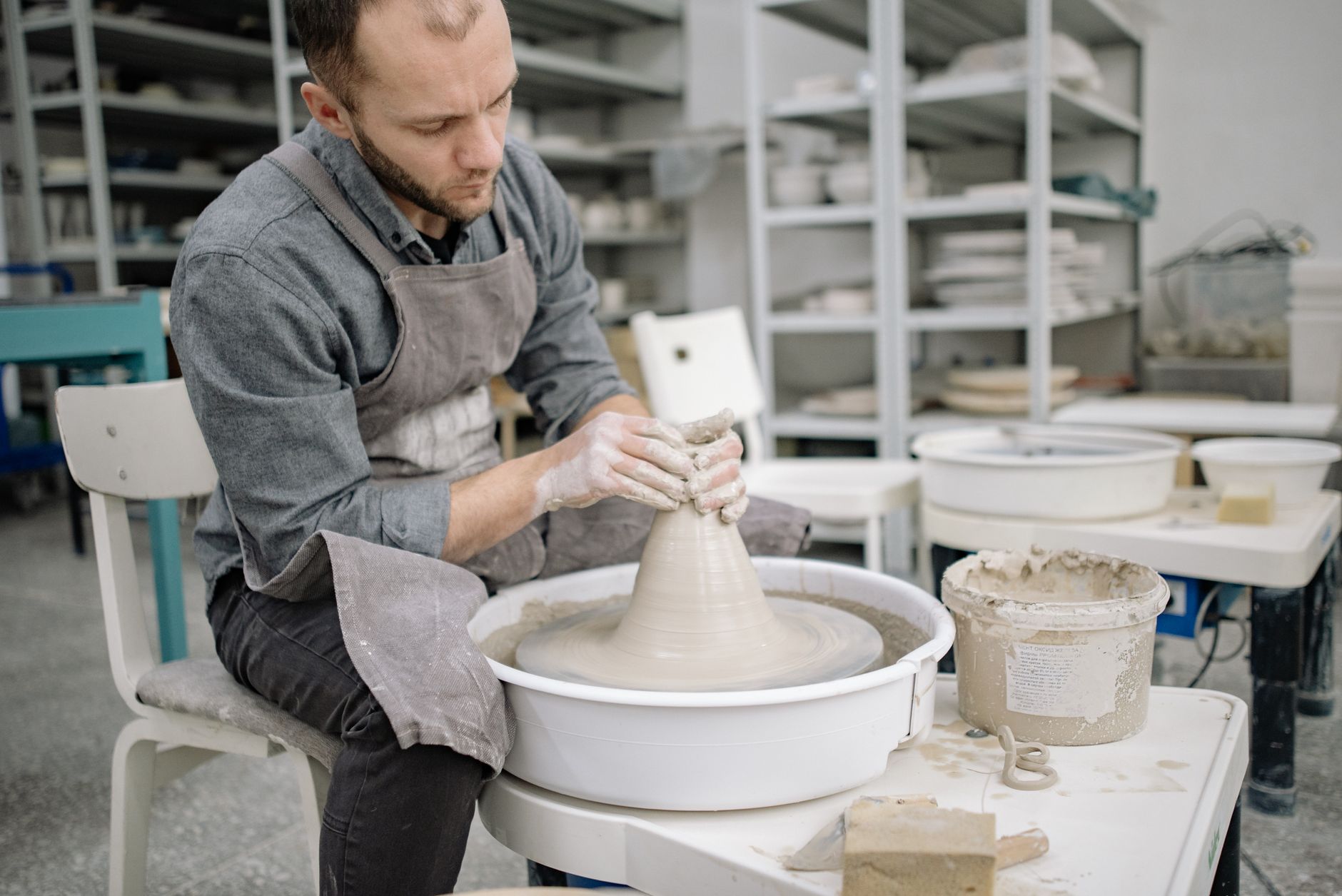
The Kitchen Table Studio: How to Learn Pottery at Home with Minimal Equipment
I learned this the hard way, decades ago, when I was trading time in a university kiln room for the quiet satisfaction of shaping mud with my own two hands: you do not need a sprawling, expensive studio to make something meaningful. Students ask me all the time if they can truly learn pottery at home without investing thousands of dollars in a professional wheel and a commercial kiln. The short answer is yes. In all my years at the wheel, I have watched absolute beginners create breathtaking work using little more than a bag of clay, a kitchen table, and a stubborn sense of curiosity.
Learning pottery at home with minimal equipment requires patience, creativity, and a willingness to experiment. As someone who's spent over 60 years at the wheel, I've seen many beginners struggle to get started simply because they think they need a masterclass setup right out of the gate. But clay doesn't care about fancy machinery. It responds to touch, to pressure, and to attention. If you want to figure out how to start learning pottery right where you are, let’s strip away the intimidation and look at what you actually need to begin your journey into clay art.
Learn with Stephen — the full course, $49.99 lifetime
8 full-length video lessons, one-time price, 30-day money-back guarantee.
Get the Video Course →Safety First: Respecting the Dust and the Earth
Before we talk about rolling out coils or pinching pots in your living room, we need to talk about safety. It is the unglamorous side of our craft, but it is essential. Working with dry clay creates fine dust containing silica, which you should never breathe into your lungs.
When you are setting up a makeshift creative space at home—whether it is a corner of the garage, a backyard patio, or a sturdy kitchen table—cleanliness is your best friend. Always work wet. Never sweep dry clay dust into the air; instead, use a damp sponge to wipe down your surfaces and floors. If you are mixing your own glazes down the road, wear a proper respirator mask. Treat the materials with respect, and your body will thank you for decades of making.
Basic Hand-Building Techniques for Beginners
You do not need a spinning wheel to make exceptional ceramics. In fact, some of the most expressive, sculptural work in the Smithsonian collections started as simple hand-built pieces. Pinch pots, coil vessels, and slab construction are the foundational pillars of working with clay, and they require almost zero specialized gear.
Start by grabbing a lump of clay about the size of an apple. Close your eyes, press your thumb into the center, and feel the cool, plastic resistance of the earth. Pinch upward and outward, turning the clay slowly in your palm. You are creating a pinch pot—the most ancient and direct form of pottery known to humanity.
Once you master the pinch pot, roll out coils like snakes between your palms and stack them to build up the walls of a taller vessel. Score the edges with a fork, dab a little water on the joint, and weld them together with your thumb. The wheel doesn't care about your age or your experience—and neither does hand-building. These fundamental techniques teach you how clay behaves under gravity and how it holds its memory as it dries.
Repurposing Household Items as Pottery Tools
Walk into any high-end ceramic supply catalog, and you will find hundreds of specialized trimming loops, wooden ribs, and shaping sponges. Put your wallet away. You likely have a fully equipped tool chest sitting right in your kitchen and bathroom drawers.
Look around your house with a maker's eye:
- **An old credit card or expired gift card** makes an exceptional smooth rib for scraping and leveling slabs.
- **A dull butter knife or a wooden chopstick** serves as a brilliant carving and detailing tool.
- **A textured piece of lace, burlap, or even a autumn leaf** pressed into moist clay leaves behind stunning organic impressions.
- **A length of unflavored dental floss or fishing line** cuts cleanly through a block of clay or releases a piece from your work surface.
- **A kitchen sponge** cut into smaller pieces is ideal for managing moisture on your hands and work.
You do not need professional gear to shape beauty. You just need an open mind and a willingness to look at everyday objects as extensions of your hands.
How to Learn Pottery at Home: Resources and Next Steps
If you are wondering how to learn pottery at home effectively, your living room can easily become a modern guild hall. Combine tactile practice with structured visual guides, and you bridge the gap between isolation and community. Watch experienced makers demonstrate technique, then take those lessons straight to your table. Pause the video when your walls start to lean, laugh when a handle snaps off, and try again.
When you are ready to move beyond hand-building and want to explore wheel throwing or deeper decorating techniques like sgraffito, you don't have to figure it all out in the dark. Practice patience and persistence—it’s a journey, not a destination. You are going to flatten a cylinder into a pancake. You are going to watch a rim wobble off center and collapse into a wet heap of mud. That is not failure; that is simply the clay whispering its first lessons to you.
Clay has a way of teaching you resilience if you let it. Head over to jepsonpotteryvideos.com to explore comprehensive pottery video lessons designed to guide your hands, deepen your understanding, and help you find your footing in this wonderful, messy craft. Grab a lump of clay today, clear off that kitchen table, and let's make something together.
Watch Stephen Demonstrate This Technique
Get lifetime access to 8 detailed pottery video lessons — wheel throwing, hand-building, glazing, and more.
Get the Video Course — $49.99 with code I4N4LHE7OL →Learn Pottery from a Master
60+ years of wheel-throwing, hand-building, glazing, and kiln work — now in detailed video lessons you can follow at your own pace.
8 full-length videos · Lifetime access · $149 $49.99 with code I4N4LHE7OL
Photo by Yan Krukau • Published August 17, 2026