Okay, here’s a blog post draft for Jepson Pottery Videos, aiming for that warm, thoughtful, and slightly melancholic Stephen Jepson voice.
The Whispering Clay – Finding Stillness
Let’s be honest, isn’t there a certain quiet desperation in the moment you’re wrestling with clay? It’s a feeling, a pressure, a yearning for something…more. It’s the feeling that something *else* is holding you back, whispering a challenge you can’t quite hear. That’s why I’ve spent a lifetime coaxing this material, this *clay*, into something beautiful, something solid, something that *feels* like home. It’s a practice, really, a conversation, and it's a constant, quiet examination of what’s truly important. It started, as many things do, with a little bit of stubbornness, and a deep, almost primal, need to *make* something.
The Unexpected Lesson
I remember my first few years at UCF, back in the early 70s. I was a graduate student, researching the psychological effects of…well, just a lot of things. I was fascinated by the way the clay responded to different pressures, the way it yielded, the way it shifted. I spent countless hours in the studio, initially, just experimenting. I wasn’t aiming for perfection, not then. I was aiming for *feeling*. I was aiming for a connection. It was a messy, chaotic process, really. I was a professor, so I had a responsibility to make sure my students understood the principles, but I was also desperately trying to avoid the frustration that comes with a half-formed lump of earth. I learned this the hard way, decades ago, when a particularly aggressive pressure sent a piece of clay tumbling across the floor. It wasn’t just a broken piece; it was a lesson in surrender, a reminder that sometimes, the best thing to do is *stop*.
The Wheel’s Secret – A Slow Dance
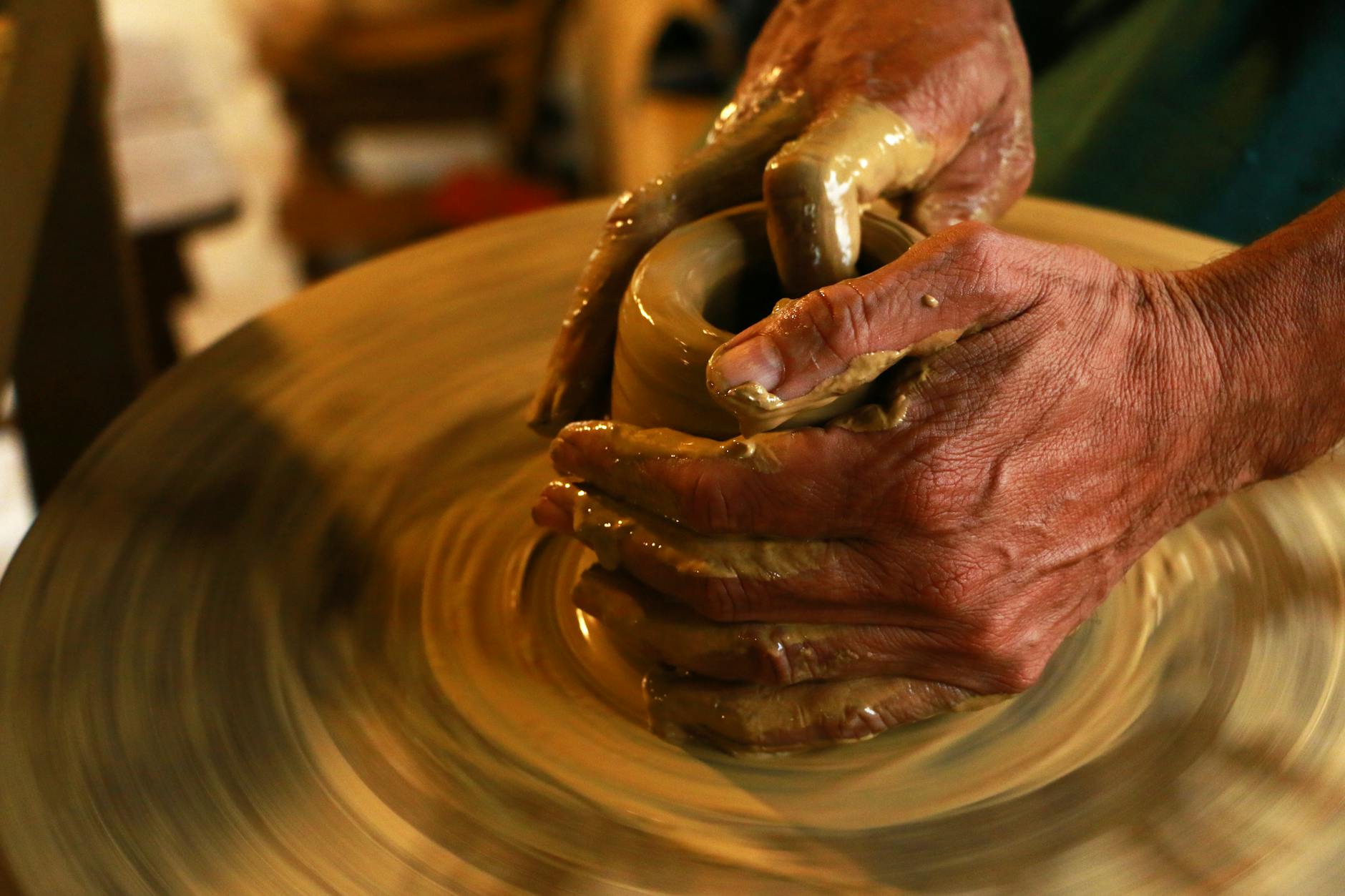
Now, the wheel. It’s a fundamental tool, of course, but it’s so much more than just a machine. It’s a dialogue, a dance. It’s a conversation between you and the clay. You set the speed, the pressure, the angle – it’s all about creating a pathway for the clay to move, to respond. And that responsiveness, that yielding, that *wanting*, that’s where the magic happens. I’ve spent a lifetime observing this process. It’s not a forceful command; it’s a gentle suggestion, a nudge. You don’t *push* the clay; you *guide* it. You don’t force it into a particular form; you coax it into a form that feels instinctively right. It's a slow, meditative dance, a constant calibration. And the wheel doesn’t care about your age or your experience—it only cares about the clay’s inherent potential. It trusts the process, even when the clay resists. It’s a quiet, persistent force, constantly reshaping itself, responding to your touch.
The Centering Technique – A Moment of Stillness
The heart of any pottery practice, I think, is the centering. It’s that initial, almost agonizing, moment when you’re trying to hold the clay perfectly still, to achieve that perfect, balanced point of stillness. It’s like trying to hold a single raindrop – it’s so small, so vulnerable, so incredibly powerful. The most common mistake is to try to force the clay upwards. It’s like trying to hold a mountain. You need to *feel* the clay, to understand its weight, its density. It’s about finding that slight resistance, that counter-pressure, that point where the clay resists your will, and you can *hold* it. I've spent countless hours perfecting this, learning how to achieve a point of stillness where the clay begins to respond to my touch. It’s not about control; it’s about acceptance. It’s about allowing the clay to be *there*, suspended in that moment of quiet potential.
Simple Steps to Get You Started
So, how do you actually *do* this? It’s surprisingly simple, really. Start with a ball of clay, a good, thick ball. Wet it thoroughly – it needs to be workable, but not too wet. Now, gently press your thumbs into the center of the ball. Let it settle. Don’t worry about making it perfect. Just let it rest. Now, using a low slap, gently roll the clay upwards. Don’t push too hard. The goal isn’t to create a perfectly symmetrical shape; it’s to create a slight, gentle curve. Repeat this process several times, working your way around the ball. Focus on keeping the clay stable, avoiding any wobbling or shifting. Think of it as a conversation, a gentle exchange of energy. Don't force it; let the clay lead. Spend a few minutes on each side, really feeling the clay beneath your hands.
Beyond the Wheel – Connecting with the Clay
The best way to truly understand this process is to simply *be* with the clay. Step away from the wheel for a while, and just *feel* it. Let it dictate the shape of your hands, the curve of your arms, the way you hold the clay. Don't try to force a particular form; instead, observe, listen, and respond. It’s in those moments of quiet observation, of allowing the clay to speak, that the real magic happens.
A Final Thought
Life, I’ve found, is rarely about achieving a perfect outcome. It’s about the journey, the moments of surprise, the unexpected discoveries. It’s about embracing the imperfections, the wobbles, the moments when the clay resists. It’s about finding the stillness within the movement. The wheel doesn't care about your age or your experience—it simply provides the opportunity to work with a material that is endlessly capable of surprising and transforming.
And that, ultimately, is the beauty of it.
Let’s connect with the earth, let’s listen to the whisper of the clay.
Visit us at jepsonpotteryvideos.com to explore more techniques, videos, and insights into the art of ceramic making. Let’s start building something beautiful together.
Watch Stephen Demonstrate This Technique
Get lifetime access to 8 detailed pottery video lessons — wheel throwing, hand-building, glazing, and more.
Get the Video Course — $49.99 →Learn Pottery from a Master
60+ years of wheel-throwing, hand-building, glazing, and kiln work — now in detailed video lessons you can follow at your own pace.
8 full-length videos · Lifetime access · $149 $49.99 with code I4N4LHE7OL
Photo by Unsplash • Published May 06, 2026